What's bugging me about the Zero Dark Thirty controversy is how it has blocked any discussion of the movie's place in film history. I'm not sure if this is the result of sexism, as if Kathryn Bigelow wouldn't be thinking in those terms, or just political sensitivities (my friends to the left are the ones condemning the film by comparing it to the work of Leni Riefenstahl - an incredibly sexist comparison) but when looked at within the context of Hollywood genre's, ZDT is the increasingly rare beast of an historical epic, at a time when every so-called-epic from Hollywood is a science fiction or superhero story. The last great historical epic was, of course, Titanic, interestingly enough made by Bigelow's former husband.
Where ZDT fits is as the bookend to Lawrence of Arabia. Each movie deals with the West's involvement with Middle Eastern politics, one from the start in the 20th Century, the other for the 21st. Back then it's one British officer struggling through the desert, now it's batteries of U.S. soldiers flying in and out with impunity, but it both cases there's the sense of "other," that the West can never, no matter how embedded, truly understand or have a place in the desert worlds. The threats to Maya's life are essentially urban - an assassination attempt rather than dying of thirst - but there's watching still the lone figure coming from a great distance (a fateful car rather than Omar Sharif), the hero putting on the local headgear to operate in the area, the lonely military outposts in a hostile land.
The question isn't whether the movie endorses torture, it's "Where do you want to go?" which Chastain outed on The Daily Show as the existential last line of the movie. In Lawrence, a man is driven insane by his immersion into this Middle Eastern world. In ZDT it's a nation (with Maya as the metaphor). Lawrence posits that his Western influence helped create the desert nations. ZDT asks if and how we want to be engaged with these very same nations - if, in another twist on the same theme in Lawrence, there a brutalization like torture involved.
ZDT's immediacy is blinding the arguers to the true nature (and greatness) of this movie. Sorry, Bigelow and Boal didn't wait thirty years to tell this huge story. They were brave enough -- and smart enough -- to tell a nine-year epic tale just moments after it concluded.
The popular children's book author wrote "Where The Wild Things Are" in 1963. He won a Caldecott Medal for the book in 1964, and was adapted into a movie in 2009.
Sendak also created costumes for ballets and staged operas, including the Czech opera "Brundibar," which he also put on paper with collaborator Pulitzer-winning playwright Tony Kushner in 2003.
He designed the Pacific Northwest Ballet's "Nutcracker" production that later became a movie shown on television, and he served as producer of various animated TV series based on his illustrations, including "Seven Little Monsters," "George and Martha" and "Little Bear."
...
"I write books as an old man, but in this country you have to be categorized, and I guess a little boy swimming in the nude in a bowl of milk (as in `In the Night Kitchen') can't be called an adult book," he told The Associated Press in 2003.
"So I write books that seem more suitable for children, and that's OK with me. They are a better audience and tougher critics. Kids tell you what they think, not what they think they should think."
During that 2003 interview, Sendak also said he felt as if he were part of a dying breed of illustrators who approached their work as craftsmen. "I feel like a dinosaur. There are a few of us left. (We) worked so hard in the `50s and `60s but some have died and computers pushed others out."
...
"Kids don't know about best sellers," he said. "They go for what they enjoy. They aren't star chasers and they don't suck up. It's why I like them."
As the tweet from McSweeney's said, "We'll be roaring our terrible roars today."
I've read a zillion of your books, Maurice, and used to eagerly anticipate each new Little Bear volume as it came out, while eating my Chicken Soup with Rice. Thanks for making all our childhoods -- and adulthoods -- all that much more imaginative and grand, and please R.I.P.
Maybe I was too harsh back in 1997, teed off at James Cameron's ferocious ego and the success of the picture. Maybe the new 3D -- and IMAX, in which I saw it -- has added a layer of depth that's actually psychological in nature. Maybe it's just that no one has spent that kind of money successfully making a huge epic Hollywood movie that isn't a science fiction or superhero movie since then.
No matter what it is, I found Titanic to be a revelation in re-release when viewing it yesterday.
It's long and towards the end it may seem to drag a little, but the movie is the full meal, something so rare these days. It has touches of David Lean in scale, John Ford in Irish spirit and Stanley Kubrick in technical audacity. It not only holds up very, very well, but it puts current movies to shame. When you look at Academy Award Best Picture winners of the past several years -- The Artist, The King's Speech, The Hurt Locker -- good as they may be, none is in the same category of majesty. Cameron may have made the last great Hollywood epic the way they used to make 'em. Except bigger.
Here's the joys:
The Actors: Not only are Kate Winslet and Leonardo DiCaprio completely believable together in the movie, but both have used their fame wisely since, moving on to artistically significant careers. DiCaprio has become Martin Scorsese's first new muse since Robert De Niro, and Kate Winslet has won an Oscar and an Emmy, notably for her fine turn as Mildred Pierce.
The Historical Detail: Cameron did a fine job of weaving history and fiction, from the knowing touches regarding John Jacob Astor to a simple scene with a young boy playing with an old-fashioned wooden top on the deck. Like the best historical fiction, fidelity to these real-like details make the made-up story palatable, and Cameron was no slouch, particularly with regard to how each of the two men responsible for building the ship made different choices when their masterpiece was going down.
The Shooting Style: My greatest pet peeve is the over-cut movie (i.e. Michael Bay), made more egregious when combined with handheld camerawork (from what I have heard, The Hunger Games). Both are generally for the lazy director who can't visualize in advance, just wants endless "choices" in the cutting room and hence shoots coverage rather than masterful shots, or tries to create energy from shaking the camera like an episode of NYPD Blue. Sometimes this is justified as "documentary style." But if I want to see a documentary, I'll see one; when I go to see a big budget feature, I expect artfulness.
The Present-Day Wraparound Story: By this is should say, The Sense of Time's Passage. While the teenage girls who enjoyed repeat viewings may have pined most for Rose and Jack in the past, it's the moment when the aged Rose, played so well by Gloria Stuart, sees the drawing of herself on television and ignites the plot that choked me up. Maybe it's being a decade and a half older than when I first saw the picture, but it is rather glorious in how it captures the painful shades of history as we each live it, the massive tragic scope of human existence, defined for every one of us by birth and death, and for those of us who live long enough to experience it, those lost times gone by. And how about that footage of the real-life decayed Titanic itself? Amazing.
The Class Consciousness: Like the best novels and, yes, movies, Titanic, shows all walks of life, from First Class to Steerage, and is clearly conscious in depicting the caging of the lower class by those working for the upper class as the lower decks fill with water and the lifeboats fill with the wealthy. The sense of class is felt in the engine rooms as well, where strong men toil in the furnace-like heat -- and are the first to drown after the iceberg is hit.
The Sinking: It's spectacular. I can't think of another movie that has done such a great job devoting such massive resources to recreating a true-life, real-time disaster. In a sense, the sinking of the Titanic was made for the cinema. With the brilliant juxtaposition of the tender lover story comes the almost unbearably ominous and terrifying sinking of the luxury liner. I had forgotten how intense it is -- my nine-year-old had to leave the theater for a few minutes. What freaked him out the most was when Jack was handcuffed to the pipe as the lower deck around him vacated and the water rose. My favorite shots are when the stern goes perpendicular to the ocean and people start to fall, but what's so striking now after 9/11 is watching some passengers choose to jump from the insane heights, so many dropping to their deaths, one we see hitting the water and not coming up.
The 3D: I've seen less than half-a-dozen movies in 3D that were at all memorable for that reason, including Kiss Me Kate, Avatar and, best to date, Hugo. Creating 3D effects after a movie is shot with 2D cameras is a much maligned process, by Cameron himself, usually creating a "cut-out" effect that doesn't happen when you shoot with 3D cameras. Well, Cameron must have supervised every frame, because this 3D transformation is gorgeous. It's not overdone but draws you it, less clearly important in the action scenes than in the dramatic ones, and (in our screening) without any obvious loss of luminosity. The worst thing about 3D is how it darkens the image, but this one seemed just as bright and vibrant as you'd want from a movie. Maybe the IMAX projection helps. It just feels very justified, and gives a good reason to return to the theater to see the movie.
Ultimately, it's a successful marrying of scale and human story, for all the reasons listed above. The spectacle never overwhelms the actors. In fact, like the best old Hollywood movies, each of the two leads gets a brilliant reveal for their entrance -- Winslet under her grand chapeau, DiCaprio from the back in his fateful poker game, both with the camera moving just so to give them power within the frame. And when they look into each others eyes, when they talk to each other, unlike so many failed big-budget pairings, they seem to actually be listening and reacting to each other.
I'm sure in a more picky mood I'd find the flaws. But to me the scene that will always endear me to the movie is when DiCaprio, having saved Winslet's life when they met, is invited to dine with her party in First Class, handles the dinner with aplomb. As I always tell me kids, learn your manners and you can dine with kings and queens. My favorite line maybe sums up how I feel about life at it's best: "Just the other night I was sleeping under a bridge and now here I am on the grandest ship in the world having champagne with you fine people."
Consider Titanic raised by this 3D release and, for some of us, rehabilitated.
Loved the first episode of the second season of Game of Thrones and I'm grateful they aren't spending any time explaining who everyone is who's survived from last season. The recap at the beginning went by like lightning so if anyone is new to the show, they probably are still mystified.
In fact, I'm not sure if I'd be adrift in this new episode without having read the books in the interim -- and would love to know if anybody who reads this was -- but HBO has done a service by providing the following introduction to the new characters, some of whom we've met tonight:
The show is huge and the story even more vicious than the first season. And much more viciousness to come...
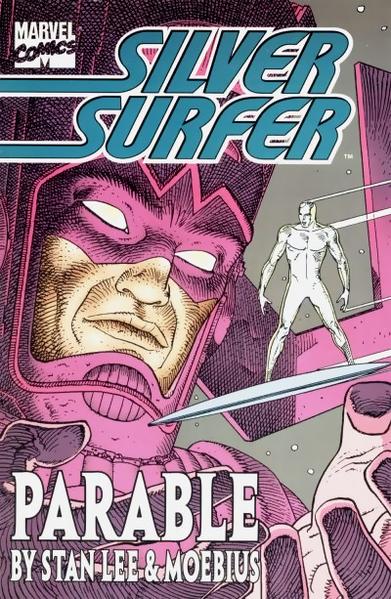
Jean "Moebius" Giraud, the brilliant and uber-influential French graphic artist/comic book auteur has died. This is a huge bummer. His sci-fi visions influenced filmmakers and fans alike, and his Western work is legendary. He just had such a huge imagination and such a clean yet personal style, sparse yet voluptuous, his panels and pages blow open the doors of the reader's imagination.
Tom Spurgeon has the best obit I've yet seen. Just one selection, about his name and Heavy Metal magazine (the American import of Metal Hurlant, how I came upon his work:
Giraud created the powerful "Moebius" handle for the loose, satirical work he had done for the magazine Hara-Kiri in the early to mid-1960s. He simply liked the name, and didn't even know if it referred to a person with whom he might have to share the appellation. In 1975 he resuscitated the name for the new group he co-founded Les Humanoides Associes and their magazine Metal Hurlant. Described by Giraud as a natural reaction to a groundswell of storytelling from comics-makers that had no natural place to put this material -- you can see precedents in some of the short stories Giraud did for Pilote just proceeding these newer comics -- and therefore needed to create a new press to do so, all in the tradition of the French avant garde. That magazine would become the home of two of Giraud's best-remembered series, Arzach and The Airtight Garage. Giraud would later describe the revolution driven by his work and others as one of creative choice rather than content, that the feeling of the artist inhabiting the work was more important than the kind of work being done. He drew a connection to the undergrounds and cartoonists like Robert Crumb, although he felt that the work of he and his peers existed in an entirely different cultural context.
Even his one Silver Surfer story, with Stan Lee scripting, is legendary:
Now that I've read four and a half George RR Martin A Song of Ice & Fire books, being just about in the middle of the one that came out late last year, it's strange to look at the new HBO teaser trailer (#2, with a lot more imagery) for Game of Thrones Season Two.
On the one hand, I'm so incredibly super-psyched to see these characters made flesh again. Tyrion, Danys, Jon, Robb, even fucked-up Cersei (as played so well by Lena Headley), and now Melisandre (being played by Black Book's awesome Carice Van Houten) and fucked-up Stannis.
On the other hand, these characters are like ancient history to me now. When Season One ended after the 10th episode, I was so insanely eager to know what happened to next to these characters, I read A Clash of Kings which is the basis for this upcoming season, and it's a doozy. If they get all the plot in and pull off a huge mother of all battles, it could be the best season of TV since The Wire.
But then I read A Storm of Swords, which the series creators/showrunners, David Benioff and D.B. Weiss say is too big for one season and will be split in two. And A Feast for Crows, the slower one that opens up new character veins in entirely fresh locations, and pissed off some diehard fans by splitting in half the simultaneous chronological events with popular characters that Martin held for the fifth book, the one I'm currently reading, A Dance with Dragons.
So I'm 3,500 pages down the road in this epic saga from the events that will kick off this new season in March. Some of these characters...well, they're almost like ancient history.
I will say this: if you love Peter Dinklage as Tyrion Lannister, as the Emmy and Golden Globe voters did or maybe even more, this is the season for you. We left with his father making him Hand of the King - the job in which the last two holders have died while serving, Jon Arryn (who's suspected murder sets off the whole series and plots) and Ned Stark (who everybody thought was the series lead for the run). Thus far the only power Tyrion's had is as much of his family fortune as his father allowed. Now he has real power.
I'll also say that my favorite book, the third, A Storm of Swords, lives up to it's name. It's not just the violence, it's all about the costs of war, not just to the characters but to the land, the people. The ending is like, three corkscrew twists that blow your mind to pieces. And while I'm so glad they'll take two seasons to tell the whole story, it's painful to think that's maybe three more years away.
So here's to the return of the champion series. As excited as I am for the March return of Mad Men, the rich world of Sterling, Cooper, Draper & Pryce is not really a fair match for the massive tapestry of Westeros and lands beyond.
Shame is the best art movie I've seen since Exit Through the Gift Shop, but a lot more minimalist. It's a film by director Steve McQueen, originally an installation artist in England, who's got a tremendous eye and a way with getting actors to commit. His first movie, which I did not see, similarly starred Irish/German actor Michael Fassbender (Magneto!) and had a one-word title, Hunger, with Fassbender as real life figure Bobby Sands, Irish nationalist who died on hunger strike in a British prison. That one looked too grueling to me. This one has a lot of nudity without the emaciation.
Brandon lives in NYC and has a super power: his gaze. Without seeming to do anything but focus his attention, his unwavering gaze, on a pretty young woman on the subway train, he can charge her erotically, to the point where her arousal turns into shame, and a chase, a predator and object of desire.
We see him, intercut with the subway as it all starts, getting out of bed and walking through his stark, stylish NYC apartment after having had sex, his shoulder's broad, penis flopping, long shot where we can see his bare feet to patterning hairline, shadowy figure emphasizing the feral. Sex is, after all, what we have in common with the beasts. Brandon the beast, as are all the other bodies he couples with, seen in beautiful silhouettes and appreciation for human form, in extended take foreplay-to-coitis, in fast-cut electroshock reaction to tortured moments of real human feeling.
Brandon is, as they're treating the movie in PR, a sex addict, and while the movie takes that seriously as a heart attack, this is no after school special. In fact, the question of whether Brandon has learned anything is open to the last frame, and I think it's meant for us to go deep in ourselves, what we believe is possible about our own capability to break out of those mechanisms we use to block feeling because, as the movie makes clear in both elliptical and visceral ways, feeling so often is about pain.
So this (incredibly well built and well-hung) sex addict (in a successful job) in Sexhattan is seducing or buying or onlining it every free moment, even in the stall at work. He seems to assume he's covering his tracks well enough, or maybe not being seen unless he so wills it, but when his sister, Sissy, comes to town, everything starts falling apart, and Brandon's addiction is exposed at work and to her.
McQueen's eye is brilliant, with surfaces reminiscent of Michael Mann's great L.A. version in Heat, but much more in mastershots, often one long Steadicam or static take with actors improvising dialogue, or sex, almost like a cinematic play, unfolding unbroken, in real time before us.
There's man times when it's reminiscent of Antonioni, where the architecture of the modern city traps the characters in defined spaces, or dwarfs them, trapped and alienated, from their own souls. There's a bravura tracking shot, something like ten blocks of jogging at night in the city, ending up at 32rd & Madison Square Garden and a broken sign that shows the lengths our addict is going to escape his shame. But as we all know, New York City is at all times the city of where fornication never sleeps.
James Badge Dale is very different than he's been in that I've seen before, playing Brandon's married hound dog boss, Nicole Beharie makes a huge impression as an office fling, as does Lucy Walters on the subway in a what's essentially a silent film performance. All the actors seem completely natural to the world, noir, distanced, darkly glamorous, almost sci-fi noir. And, yes, they're great to look at.
Fassbender carries every scene, so completely committed to every revealing inch of the role, running a slow burn gamut that leads him all the way down to hell. Several times in the movie he hangs his head (in shame, of course) so low that, shot from behind, he appears to be the headless man. Man lowered below the beast, because he knows of his sin.
But it's Carrie Mulligan who breaks out completely in this. As Sissy, the ne'er-do-well sister just looking for love and shelter but getting ditched and burned at every turn, nowhere in sight is that prim core that's even in her character in Drive, let alone An Education. She there's naked, flawed, the most human thing in the movie. She sings an almost unbearably slowed down version of"New York, New York," revealing a hell of a voice and holding an infinite close-up, her eyes breaking our hearts, and her brother's.
What is it they share? What has caused him to run away from even her, and her to run to everyone? It's only obliquely referenced, just enough of a hint, but you can use your imagination. There's an element of horror Shame, that thing that at times makes it closer to Salo, or the 120 Days of SodomthanLast Tango in Paris, that the past hints at and the present dreads.
Because Shame equals loneliness, and loneliness is it's own shame. A cycle of love and pain. Shame, as my mother liked to say, one of the great twin gifts that a parent gives a child.
Gotta love the new meme of the U.C. Davis pepper-spraying cop making his way through art history. There's this article, this blog post and then then Tumblr. My personal faves:
Evidently in honor of a new book coming out about the work of Main Titles designer extraordinaire, Saul Bass.
What's striking is how modern his work seems -- still. With most of his work created pre-CGI, it's shocking how visionary and vivid so much of it is. Vertigo, of course, is a favorite, along with Psycho which I recently saw in the theater again -- the opening credits with the Bernard Herrmann music really set you on edge from the start, give the sense that something really twisted is already underway. And the work for Otto Preminger as well as Martin Scorsese is ingenious.
This is a somewhat self-serving post, as I've been published twice now in my friend's online/print magazine, Sensitive Skin, but it still warrants writing about because the magazine is so damned good.
Described by publisher/editor Bernard "Buddy" Meisler as "Post-beat, pre-apocalyptic art, writing and what-not," the original incarnation was in NYC's Lower East Side beginning 1992, revived a little over a year ago from his current home in Marin County. With a reservoir of good will, contacts and eye for edgy, neo-bohemian literature, art, music and video, there's a wealth of great material in each issue, especially the one just released, Sensitive Skin issue #7.
Aside from an excerpt from my own screenplay, Little Punks, with an inspired-by-true-life story of meeting legendary New York Dolls guitarist/co-founder, Johnny Thunders, there's a brilliant piece on being a Bad Girl by my good friend, Erika Schickel, plus writing by Rob Roberge, Díre McCain, Marguerite Van Cook, Drew Hubner, John S. Hall and City of Strangers, a video by Flame Schon, art by Shalom Neuman and Janice Sloane and music by contemporary composer Mike Fink and Bay Area jazz combo LaMacchia/Myrner/Feiszli.
You can order print copies or just read it online. The magazine maintains an active Facebook page as well, which is a lot of fun. In 2011 there are so many more opportunities for the magazine to go viral than there were in 1992. One can only hope it continues to grow in readership, as I believe it will grow in stature.
And, if there's one piece not to your fancy, there's always another one a click -- or page turn -- away.
The Tree of Life is the rare movie you come out of feeling wiser than you went in. I saw it on a fairly large screen, sitting relatively close and low, which worked as much of the movie is shot at kid's eye level as fits the main story, Terrence Malick's autobiographical memory film of growing up with two younger brothers under a domineering father (Brad Pitt, just note perfect throughout, a role for which he'll be remembered) and angelic but subservient mother (Jessica Chastain, luminous) in smalltown Waco, TX in the 1950's. The viewing angle also fit the swirling uber-modern city sequences with Sean Penn as the boy grown up, a successful architect, in spiritual crisis remembering the time and then projecting into some heavenly plane.
And it was fitting for the extraordinary beginning of time sequence, taking us from big bang through dinosaurs, their extinction by asteroid, putting every one of our lifespans in epic historical perspective, as it does the young life that's lost off-screen and off in time.
With a liquidity in the editing that flows backwards and forwards in time, eschewing dialogue in favor of voices drifting in and out, an idyll that asks the deeper questions and begs to be experienced on as big a screen as possible, Malick takes us on a dream journey that feels more bracingly real and natural than anything I can imagine onscreen from recent years. Maybe long passages of Gus Van Sant's Elephant, maybe Malick's last movie, the all-too-overlooked The New World which gave us the origin of our nation, America. It plays like the movie Malick's been working towards ever since Badland back in 1973, at once his most personal and most courageous.
While I've heard quibbles about the end, which were actual boos from one section of a balcony at Cannes, I can't fault Malick for how he tries to wrap things up. I'm left reflecting, haunted by the evocation of a time very close to my youth, just a few years before and in an era when change was not yet fully bubbling, nothing like the lighting lifestyles of today. A time when a young boy could reflect on his place in the world by a stream, running out unlocked screen doors, into the street, by the abandoned house with the windows begging to be smashed, at a dinner table where the wrong word could provoke an awesome wrath.
Not a plot movie, not even really a character movie, more of a time and space movie, a 2001 with an earthly setting and a flickering light. Maybe not for everybody, but it will be known and seen and seen again, because it is truly art and it is truly provocative -- not by violence or shock, but to the spirit.
Malick's next movie is reportedly a romantic story, and one can reasonably hope that by putting so much of what he's wanted to say for so long in The Tree of Life, he'll have a cleansed palate and give us something we truly never expected from him.
But I'll bet one thing: the movie won't unfold in a way that anyone cab anticipate.