Showing posts with label obituary. Show all posts

Thursday, December 06, 2012

Take 86

Mainstream breakthrough jazz legend Dave Brubeck died yesterday at age 91.  I was lucky enough to see him perform live in the mid-1970's, already gray-haired and with at least one of his sons in his band.  He had tremendous graciousness as well as grace, and his music was surprisingly accessible, per this Ashley Fetters post in The Atlantic today:

There's another reason why the popularity of "Take Five" is remarkable: It's performed in a musical structure that people in the Western world often show cognitive resistance to.

Most Western music is dependent on a structure with two, three, or four beats in a measure—or some multiple of those—with even spaces between the emphasized beats.
...
"Take Five," though, is written and performed in a 5/4 time signature, as my jazz-fan colleague David Graham mentioned yesterday—meaning there are five beats per measure. (Hence the title.) When there are five, seven, eleven, or almost any number of beats in a measure that doesn't divide evenly into twos or threes, the beats can become non-isochronous—meaning the emphasized beats, the ones you would tap your foot along with, aren't evenly spaced. For example: Try clapping along with the intro to the Mission: Impossible theme, which is also in a 5/4 time signature.

Time signatures like these are often known as "irregular," "complex," or "asymmetrical" time signatures.

Here's that very number, performed in 1966, seven years after it's initial release.  Brubeck had a relatively early racially integrated combo as well.  Right on, Dave:


Timeless cool.

Tuesday, May 08, 2012

WIld Man

Sad to see him go, but it's been a long, productive, influential life for Maurice Sendak, gone at age 83:

The popular children's book author wrote "Where The Wild Things Are" in 1963. He won a Caldecott Medal for the book in 1964, and was adapted into a movie in 2009.

According to The New York Times, a posthumous picture book, "My Brother's Book," is scheduled to be published in February 2013.

...

Sendak also created costumes for ballets and staged operas, including the Czech opera "Brundibar," which he also put on paper with collaborator Pulitzer-winning playwright Tony Kushner in 2003.

He designed the Pacific Northwest Ballet's "Nutcracker" production that later became a movie shown on television, and he served as producer of various animated TV series based on his illustrations, including "Seven Little Monsters," "George and Martha" and "Little Bear."

...

"I write books as an old man, but in this country you have to be categorized, and I guess a little boy swimming in the nude in a bowl of milk (as in `In the Night Kitchen') can't be called an adult book," he told The Associated Press in 2003.

"So I write books that seem more suitable for children, and that's OK with me. They are a better audience and tougher critics. Kids tell you what they think, not what they think they should think."

During that 2003 interview, Sendak also said he felt as if he were part of a dying breed of illustrators who approached their work as craftsmen. "I feel like a dinosaur. There are a few of us left. (We) worked so hard in the `50s and `60s but some have died and computers pushed others out."

...

"Kids don't know about best sellers," he said. "They go for what they enjoy. They aren't star chasers and they don't suck up. It's why I like them."

As the tweet from McSweeney's said, "We'll be roaring our terrible roars today."

I've read a zillion of your books, Maurice, and used to eagerly anticipate each new Little Bear volume as it came out, while eating my Chicken Soup with Rice. Thanks for making all our childhoods -- and adulthoods -- all that much more imaginative and grand, and please R.I.P.

Sunday, March 11, 2012

Moebius


Jean "Moebius" Giraud, the brilliant and uber-influential French graphic artist/comic book auteur has died. This is a huge bummer. His sci-fi visions influenced filmmakers and fans alike, and his Western work is legendary. He just had such a huge imagination and such a clean yet personal style, sparse yet voluptuous, his panels and pages blow open the doors of the reader's imagination.


Tom Spurgeon has the best obit I've yet seen. Just one selection, about his name and Heavy Metal magazine (the American import of Metal Hurlant, how I came upon his work:
Giraud created the powerful "Moebius" handle for the loose, satirical work he had done for the magazine Hara-Kiri in the early to mid-1960s. He simply liked the name, and didn't even know if it referred to a person with whom he might have to share the appellation. In 1975 he resuscitated the name for the new group he co-founded Les Humanoides Associes and their magazine Metal Hurlant. Described by Giraud as a natural reaction to a groundswell of storytelling from comics-makers that had no natural place to put this material -- you can see precedents in some of the short stories Giraud did for Pilote just proceeding these newer comics -- and therefore needed to create a new press to do so, all in the tradition of the French avant garde. That magazine would become the home of two of Giraud's best-remembered series, Arzach and The Airtight Garage. Giraud would later describe the revolution driven by his work and others as one of creative choice rather than content, that the feeling of the artist inhabiting the work was more important than the kind of work being done. He drew a connection to the undergrounds and cartoonists like Robert Crumb, although he felt that the work of he and his peers existed in an entirely different cultural context.


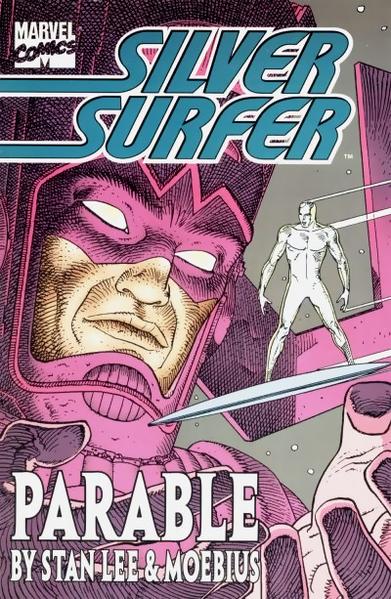
Even his one Silver Surfer story, with Stan Lee scripting, is legendary:


He will be missed.

Monday, December 19, 2011

Vaclav Havel: Rock Star

Buried in the news of the Kim Jong-Il's death yesterday and the immediacy of associated diplomacy was the passing of Czech playwright, national leader and savior/hero, Vaclav Havel, who gave the world the Velvet Revolution of 1989. After having been jailed numerous times by the Soviet puppet regime, he eventually became a great leader:

More so than any of the prominent figures from the period of anti-communist dissent, Havel used his position, voice and moral authority to advance present-day struggles for freedom. If he looked backward at all, it was only to find lessons from his own experience that might be useful for freedom-fighters today. Communicating those lessons, he once wrote to the Cuban dissident Oswaldo Paya, was a way of repaying a debt to those who helped him in his own time of need.

He found many ways to repay that debt. In 1991, at a moment when he himself might have received the Nobel Peace Prize for leading the Velvet Revolution, he campaigned successfully for it to be awarded to Burmese activist Aung San Suu Kyi and remained a steadfast supporter of the Burmese democracy movement. He termed Alexander Lukashenko’s regime in Belarus “the disgrace of Europe” and extended moral and practical solidarity to the opposition there. He developed a deep connection with Paya’s Varela Project,which pressed for free elections and other basic rights in Cuba; and he established the International Committee for Democracy in Cuba, recruiting to it ex-presidents, members of parliament and distinguished writers from throughout Latin America and Europe. He co-authored a report applying the “responsibility to protect” doctrine to the totalitarian system in North Korea, And he led the successful international campaign to give the Chinese writer Liu Xiaobo the Nobel Peace Prize, launching it with an open letter to Chinese President Hu Jintao demanding Liu’s release from prison. The letter was delivered on Jan. 6, 2010, the 33rd anniversary of the day Havel himself was arrested for delivering the democracy manifesto Charter 77 to the Prague Castle.
This is the opposite of Kim Jong-Il, selfless rather than selfish. While artists sometimes turn leader with disastrous results, i.e. painter Adolph Hitler, Havel proved to be the right artist to lead his country into freedom.

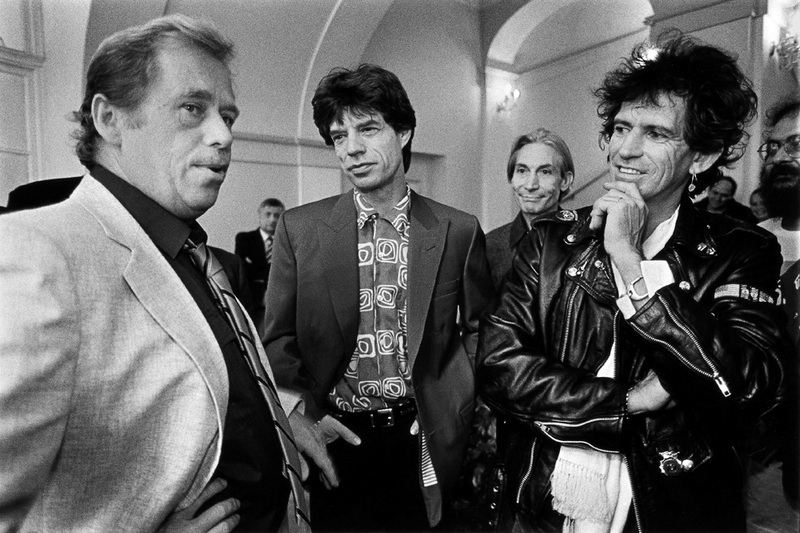
Best of all, he had awesome taste in popular music, starting with his favorite and friend, Frank Zappa:


Not to mention Lou Reed and The Velvet Underground (like the Velvet Revolution):


And then, of course:


A better leader to remember. Keep on rocking in the free world, Vaclav, wherever you are.

Sunday, December 18, 2011

Like Father Like Grandson

Here in America, when we think of Kim Il-Sung, we probably think of this:


The reality is that this sick son of bitch, now mercifully dead (for the people of North Korea), was the author of famine in his country and an oppressor of his people -- to serve his own pleasures:

From 1995 to 1997, famine raged in North Korea. According to a report by North Korea’s Public Security Ministry, up to 3 million lost their lives (source). As this isn’t the most neutral observer, real numbers are probably much higher. (See an older post here about not trusting governments with the job of human rights measurement). Still today, the country is in such a state that it won’t take much for famine to return.

It was Kim Il Sung who used to say, “Communism is rice,” meaning the system would succeed by giving the people enough to eat. The famine was caused by mismanagement and the inability to adapt to the collapse of the Soviet Union and the economic transformation of China.

All that said, Kim Jong Il acted with callous disregard to the suffering of his people. Rather than lose face, the North Koreans denied the food crisis for years and then kept humanitarian aid out of the places it was most needed. The regime executed people who tried to adapt by engaging in private business.

By the way, Kim Jong Il is famous for being one of the biggest foodies in Asia. Throughout the nineteen-eighties and well into the famine, he flew couriers around the world to procure delicacies for his own palate — fresh fish from Tokyo for his sushi, cheese from France, caviar from Uzbekistan and Iran, mangoes and papaya from Thailand.

Kim Jong-Il got the power by primogeniture from Kim Il-Sung and has passed it onto his 27-year old son, Kim Jong-Un, who is expected to be controlled by his uncle on his mother's side, Chang Sung-Taek.

Here's the three generations:

Grandfather


Father

Son

Grand Vizier (Chang Sang-Taek)

I'm sure they're expecting us to invade right now, and I'm sure Beijing is there to stop it, diplomatically at first.

This will be a very interesting week for President Obama. His Administration is saying it's taken out Al Quaeda, how about breaking down the walls into North Korea at this critical juncture. The top strategist in America against a regime that's been prepared to lose their dear leader for awhile, but probably hoped it would still not be so soon.

The question is, will someone from this crime family end up on a meathook and, if so, who will it be?

Wednesday, December 07, 2011

Just the Facts, Ma'am


It's like a piece of television history dying off like an old oak tree. R.I.P, Harry Morgan:
Harry Morgan, the prolific character actor best known for playing the acerbic but kindly Colonel Potter in the long-running television series “M*A*S*H,” died on Wednesday morning at his home in Los Angeles. He was 96.
...

In more than 100 movies, Mr. Morgan played Western bad guys, characters with names like Rocky and Shorty, loyal sidekicks, judges, sheriffs, soldiers, thugs and police chiefs.

On television, he played Officer Bill Gannon with a phlegmatic but light touch to Jack Webb’s always-by-the-book Sgt. Joe Friday in the updated “Dragnet,” from 1967 to 1970. He starred as Pete Porter, a harried husband, in the situation comedy “Pete and Gladys” (1960-62), reprising a role he had played on “December Bride” (1954-59). He was also a regular on “The Richard Boone Show” (1963-64), “Kentucky Jones” (1964-65), “The D.A.” (1971-72), “Hec Ramsey” (1972-74) and “Blacke’s Magic” (1986).

...

Mr. Morgan’s television credits were prodigious. He once estimated that in one show or another, he was seen in prime time for 35 straight years. Regarded as one of the busiest actors in the medium, he had continuing roles in at least 10 series, which, combined with his guest appearances, amounted to hundreds of episodes.

Wow, talk about a prolific career. It's a face and delivery a number of generations grew up with.

Another end-of-the-century moment, about a decade later than originally scheduled.

Monday, November 28, 2011

Bunch of Endings

Rep. Barney Frank (D-MA) announced his retirement from Congress today -- he won't be running again next year -- at age 71. This is a huge bummer legislatively, but hopefully he'll turn up on news commentary a lot more, especially as he promising not to become a lobbyist. Consistently the smartest and wittiest guy in the House, Frank was no different today:
[Barney Frank] on the House under Republican rule: “It consists half of people who think like Michele Bachmann and half of people who are afraid of losing a primary to people who think like Michele Bachmann and that leaves very little room to work things out.”
Goodbye to Ken Russell, legendary British film director known for his combination or erudition and over-the-top visuals. Classics include: Women in Love (Oscar for star Glenda Jackson), Altered States, Tommy, The Lair of the White Worm, The Devils. Who can ever forget Tina Turner as the Acid Queen?

Goodbye to pre-IPO Facebook, between April and June 2012. The stock options will never mean the same thing again, the innocence lost, time for quarterly analyst calls and big annual reports. Guaranteed to have more investors than anyone imagines.

Goodbye to 2000's European prosperity. And maybe the Euro.

And, as much as we all hope not, we may be saying hello to a new global depression.

Thursday, October 06, 2011

The King is Dead

Has there ever been a more beloved CEO than Steve Jobs? He earned it the hard way, by losing the wildly successful company he founded in his youth, watching it slide down into the depths, then getting bought back in and taking it to greater glories than it had ever achieved.

I learned about his death on one of his devices. I'm writing this on another, in his browser. My fingers have touched his products more than any other single company's products. Not even Toyota. And even the Prius looks like an iCar.

56, I mean, what a life. What a profound impact on human learning, on industrial design, on the consumption of media.

I think what remains to be seen is if Apple ever creates another revolutionary product. The Mac, the Mac notebook, the iPhone, the iPad. (Let alone Pixar.) Is the announcement of the iPhone 4S the day before his passing a harbinger of more evolution -- but no revolution -- to come?

I certainly hope not. And by the note on the Apple website (after you click on the photo of Steve in a layout I wonder if he approved), they will be working to make his spirit the permanent spirit of the company.

Per Max Weber, any organization with veer from its original purpose over time, sometimes in betrayal of its original goals and function. Apple will definitely be different after Steve Jobs, but what it becomes may be something new and what we need for the post-Steve Jobs times. If the apple has many seeds, and those seeds bear fruit.

From the one, many?

Tuesday, August 23, 2011

Songwriters

Just lost two, Jerry Leiber of Leiber & Stoller, rock & roll, and Nick Ashford of Ashford & Simpson, Motown/soul. I love great songwriters, this hurts.

Jerome Leiber was born on April 25, 1933, in Baltimore, where his parents, Jewish immigrants from Poland, ran a general store. When Jerry was 5, his father died and his mother tried, with little success, to run a small store in one of the city’s worst slums. When he was 12, she took him to Los Angeles.

It was while attending Fairfax High in Los Angeles and working in Norty’s Record Shop that he met Leonard Sill, a promoter for Modern Records, and confessed that he wanted to be a songwriter. After Sill urged him to find a pianist who could help him put his ideas onto sheet music he met Mr. Stoller through a friend, and the two began writing together

“Often I would have a start, two or four lines,” Mr. Leiber told Robert Palmer, the author of “Baby, That Was Rock & Roll: The Legendary Leiber and Stoller” (1978). “Mike would sit at the piano and start to jam, just playing, fooling around, and I’d throw out a line. He’d accommodate the line — metrically, rhythmically.”

Ashford:

Nickolas Ashford was born in Fairfield, S.C., and raised in Willow Run, Mich., where his father, Calvin, was a construction worker. He got his musical start at Willow Run Baptist Church, singing and writing songs for the gospel choir. He briefly attended Eastern Michigan University, in Ypsilanti, before heading to New York, where he tried but failed to find success as a dancer.

In 1964, while homeless, Mr. Ashford went to White Rock Baptist Church in Harlem, where he met Ms. Simpson, a 17-year-old recent high school graduate who was studying music. They began writing songs together, selling the first bunch for $64. In 1966, after Ray Charles sang “Let’s Go Get Stoned,” a song Ashford & Simpson wrote with Joey Armstead, the duo signed on with Motown as staff writers and producers.

They wrote for virtually every major act on the label, including Gladys Knight and the Pips (“Didn’t You Know You’d Have to Cry Sometime”) and Smokey Robinson and the Miracles (“Who’s Gonna Take the Blame”).

While writing for Motown, Ashford & Simpson nursed a desire to perform, which Berry Gordy Jr., the founder and patriarch of the label, discouraged. They left the label in 1973 and married in 1974.

God bless the creators.

Sunday, July 24, 2011

Back to Black

I fell hard for Amy Winehouse in 2007, documented here. Since her death by overdose earlier this weekend I've been in Facebook status update arguments over her talent, that although she died at age 27 like Janis Joplin, Brian Jones, Kurt Cobain, Jimi Hendrix, Jim Morrison and probably a few others I've missed, she's not worthy to share their bandstand in the afterlife. It's enough to put me off taste wars for life.

Here's the woman who kicked off the nouveau soul revolution, who blew open the radio doors for Joss Stone, Duffy, Sharon Jones (they shared the same band, The Dap-Kings), Adele and, up next, Haley Reinhart. She had two less albums than Janis and maybe didn't have the cultural impact, but what recording star does these days, with pop music so fragmented? She was the subject of much tabloid journalism and chased by paparazzi, which means enough people were interested, but more importantly, she set a direction for her music early on, talking in interviews how she found pop music so flat and bland, and brought some earthy retro values with up-to-date lyrics.

Tragically, she wasn't bright enough to escape her addiction, instead letting it take her to an early grave. Since she was such a mess it's fodder for dark comedy, like when her mother (Janis, whoa, a pharmacist, ouch!) is quoted as saying, "She seemed out of it."

I thought her breast augmentation a year or so ago was the real beginning of the end. A pop star who has already made it doesn't need them for her career, unless she is pathologically insecure. But Amy rarely looked healthy in body, at least not after the music videos for her breakthrough Back to Black album. And I'm sure make-up and lighting helped.

It seems almost triumphant that Lindsay Lohan has survived Amy Winehouse, but she doesn't seem to be an opiate addict, so unless there's a heart problem found by the cocaine or a drunken car crash (which will probably kill others and leave her alive), she may be looking at a much slower demise. In any case, it seems only fitting to post a link (embedding disabled) to the poor little Jewish girl from London's most popular tune, pleasurably defiant, but in the end contradicted by life itself, Rehab.

Shoulda gone.

Yes, yes, yes.

Sunday, July 10, 2011

Betty

Per my father's maxim that you have to be at least slightly insane to want to be President of the United States of America, Gerald Ford may be the rare case of a "not insane" President. Maybe not considered the smartest and certainly not the most successful and actually getting elected, he was essentially appointed President-in-waiting by Richard Nixon, on the verge of impeachment and, ultimately, resignation. One of the finest characteristics of President Ford was, of course, his wife Betty Ford, my kind of Republican, which is to say, smart and sensible and not insane. She passed away a little over a day ago at age 93.

There are three reasons I admired Ms. Ford in particular, two of which are fairly well known. One is how she opened up regarding the breast cancer she suffered while First Lady, the radical mastectomy and chemotherapy, the first time I can recall a public figure sharing such a common condition with the public. This led to a huge influx in women going to get tested themselves.

Second, she revealed her own alcoholism and pill addiction, leading to founding the Betty Ford Center in Palm Springs. Again, her own private battle, after having gone public, led to a de-stigmatization of what had historically been something hidden, secret, shameful.

Lastly, or perhaps first, there was the Ford's White House bed. It was a something of a deal at the time that this was a Presidential couple that actually slept together, rather than the twin beds (separate bedrooms?) of Richard and Pat Nixon, possibly going back further than that as well. The Fords had a lot of kids, who were smart and sometimes a little too outspoken themselves, but they sure looked like they were still in love. That queen-sized bed they brought into the White House was noted by my parents, and while I don't think they voted for Gerald Ford in the ensuing election (his pardon of Richard Nixon sealed his own fate), they approved. Nobody really hated Jerry Ford.

And everybody admired Betty.

Tuesday, July 05, 2011

Rock On, Lady

Jane Scott, gave her grown-up life to rock & roll:

In four happy decades as a rock writer for The Cleveland Plain Dealer, Ms. Scott, who died on Monday at 92, braved mud and mosh pits, foul weather and fouler language, “a drop of bleached blond and pink polyester in a roiling sea of blue denim and black leather,” as The Philadelphia Inquirer once described her.

...

Ms. Scott, who took up her beat in 1964 at 45 and retired nine years ago at nearly 83, was often called the world’s oldest teenager, a description she hastened to correct. “Second-oldest,” she would say. “After Dick Clark.”

At a time when newspapers were famously inhospitable to women, Ms. Scott made her career by tackling a beat that few writers of either sex wanted — a beat that barely existed when she began writing about rock ’n’ roll in the mid-1960s.

Over the years, she interviewed many of the biggest names in pop music, including Paul McCartney (“such a nice boy,” she said afterward); Mick Jagger (“sweet and funny”); and Jim Morrison and Jimi Hendrix (“I loved them both”).

Ride on, Lady Jane. The musicians loved you, like Lou Reed himself:
“I love Jane Scott. I always have, I always will. When I was in the Velvet Underground, Jane was one of the only people I can remember who was nice to us. Interested in the music, the styles -- a very smart, guileless lady who loved music and musicians and had unbiased attitudes towards the evolving culture.”
You're gone now, and those times are riding out faster every day.

Sunday, June 19, 2011

Big Man Down


When the change was made uptown
And the big man joined the band
From the coastline to the city
All the little pretties raise their hands
Im gonna sit back right easy and laugh
When scooter and the big man bust this city in half...
I first saw Clarence Clemons when I first saw Bruce Springsteen and his whole E Street Band, on the second night of the Darkness on the Edge of Town tour, the night before the album was even released (we had only heard "Prove It All Night"), three years after Bruce had stopped playing post Born to Run in order to extricate himself legally from his former manager. Bruce and Clarence were out in front when the band took the stage in the 2,000-seat Palace Theater, Albany, NY, and they started with a song none of us had ever heard before, "Badlands." And like those very rare songs, you got it when they played it even if it was for the first time. Clarence was wailing like all their lives depended on it, perfect match for the wailing guitars, we were on our feet. And that was their comeback. The one that started it all.

Within a two months they were playing big halls and stadiums, it would be so hard to ever get that close to them again. And with the Big Man gone at age 69, it's earthshaking for those of us who grew up with his sax breaks and solos on "Born to Run," "Jungleland," "Candy's Room" and, my favorite (supposed written by Springsteen explicitly for Clarence's solo), "She's the One."

Has there ever been a sideman known and loved as much? I can't imagine the E Street Band can ever be the same. I'm assuming they'll go ahead and tour as planned, who knows how many sax players they'll need to fill Clarence's shoes. And his own journey was profound, including his own band and triumphs, a number of wives and a spiritual awakening.


But rock & roll, per Clarence and Bruce themselves, is about healing, at least the way they've always practiced it. So I expect some healing in concert.

For now, remember and enjoy:


The crowd goes wild.